2026 NBA Draft Notes
My top 20 players.

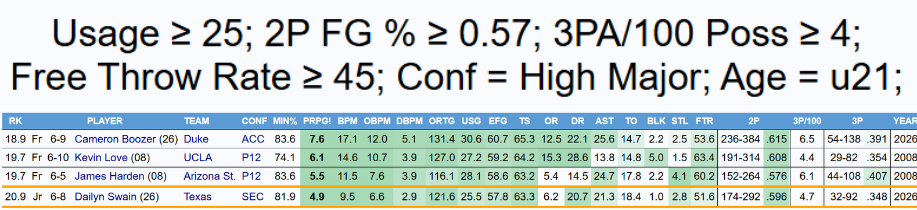
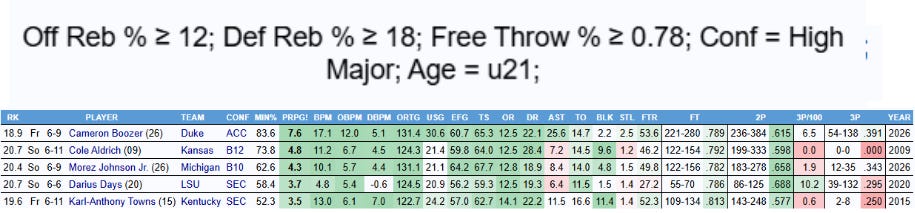
As this cycle concludes, I thought I would present my thoughts more thoroughly. In my opinion, draft boards without any philosophical backing are pointless. This cycle, especially due to the popularity & polarity of certain players (and the engagement that came with), saw far more boards posted than ever before. With every new board that hit my timeline, it further reinforced how pointless they are; truly, anyone can put names on a list and reheat others’ analysis. Now that I got that out of the way… the most important things to me are age, production, and athleticism. When I altered my evals to fit under a “philosophy,” it made me move things around and realize I was overindexing on certain players’ flaws when they hit the thresholds for players I like. For example, I was really low on Ament/Koa overall, and lower on Flemings than the people I talk to. When simplifying age/prod/athl as far as possible into a query, it (expectedly) pulls the top 6 players from my most recent board (Booz, Aj, Caleb, Okorie, DP, AG). Fundamentally, I cannot have 6 of the 9 players here top 6, then the other 3 that much further behind.
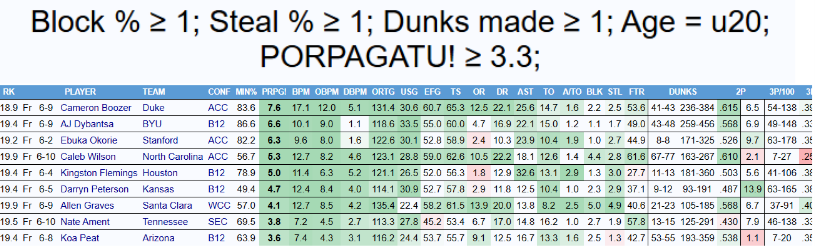
1: Cameron Boozer - 18.9 - 6’9 253 - Duke
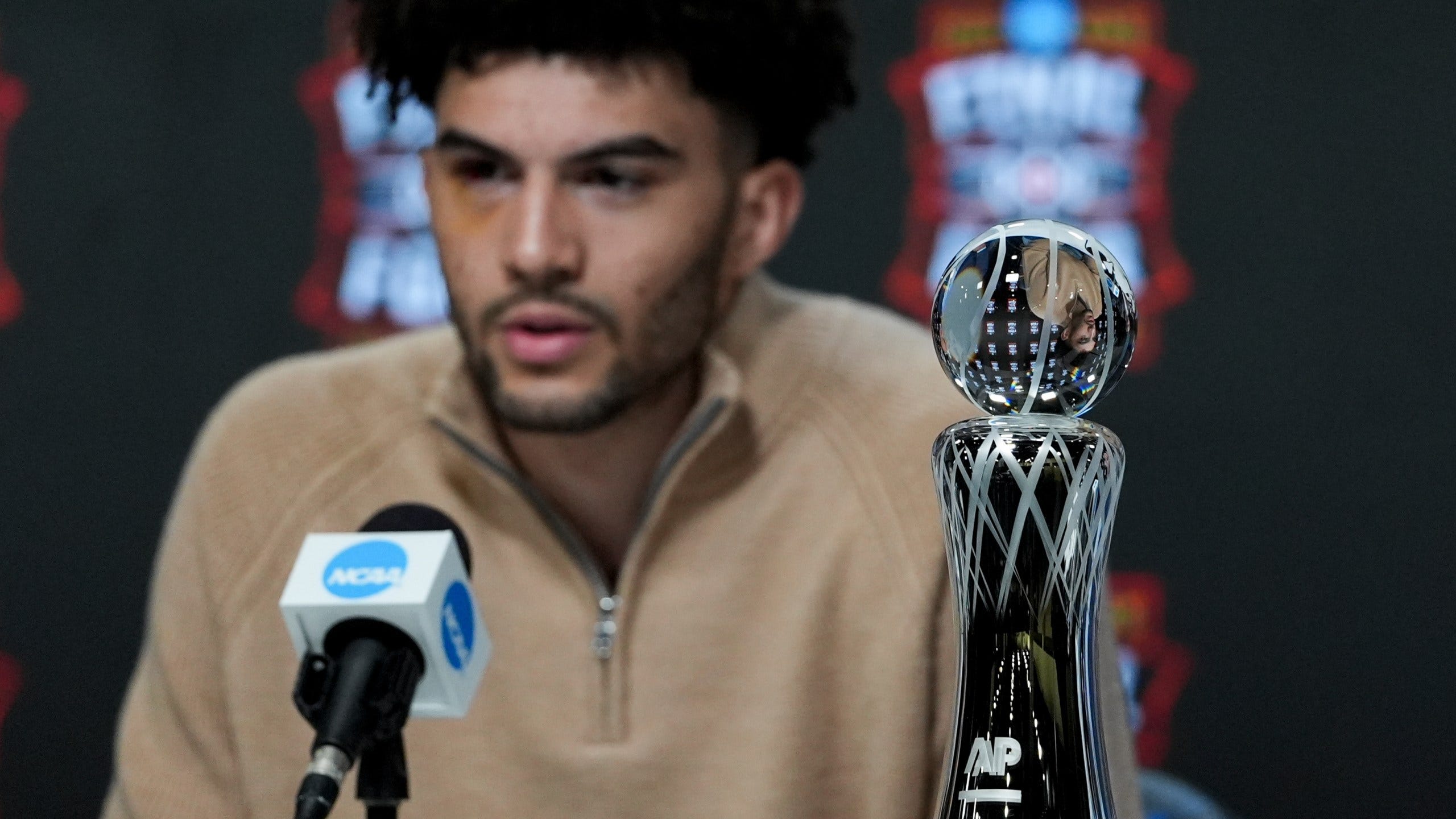
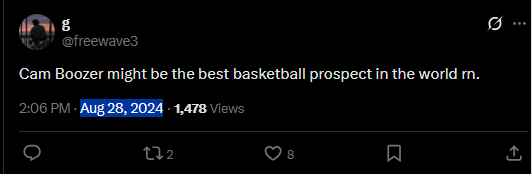
Since this tweet, Cam completed a 4-peat with Columbus, won the Gatorade National Player of the Year, then added another 10+ accolades at Duke, including the Wooden Award. He’s still the best prospect in the world. He posted the second-highest BPM of all time, is the youngest in the class, and, despite his aesthetic lowlights, is equally the most well-rounded and highest-ceiling player in the class.
2: Aj Dybantsa- 19.4 - 6’9 217 - BYU
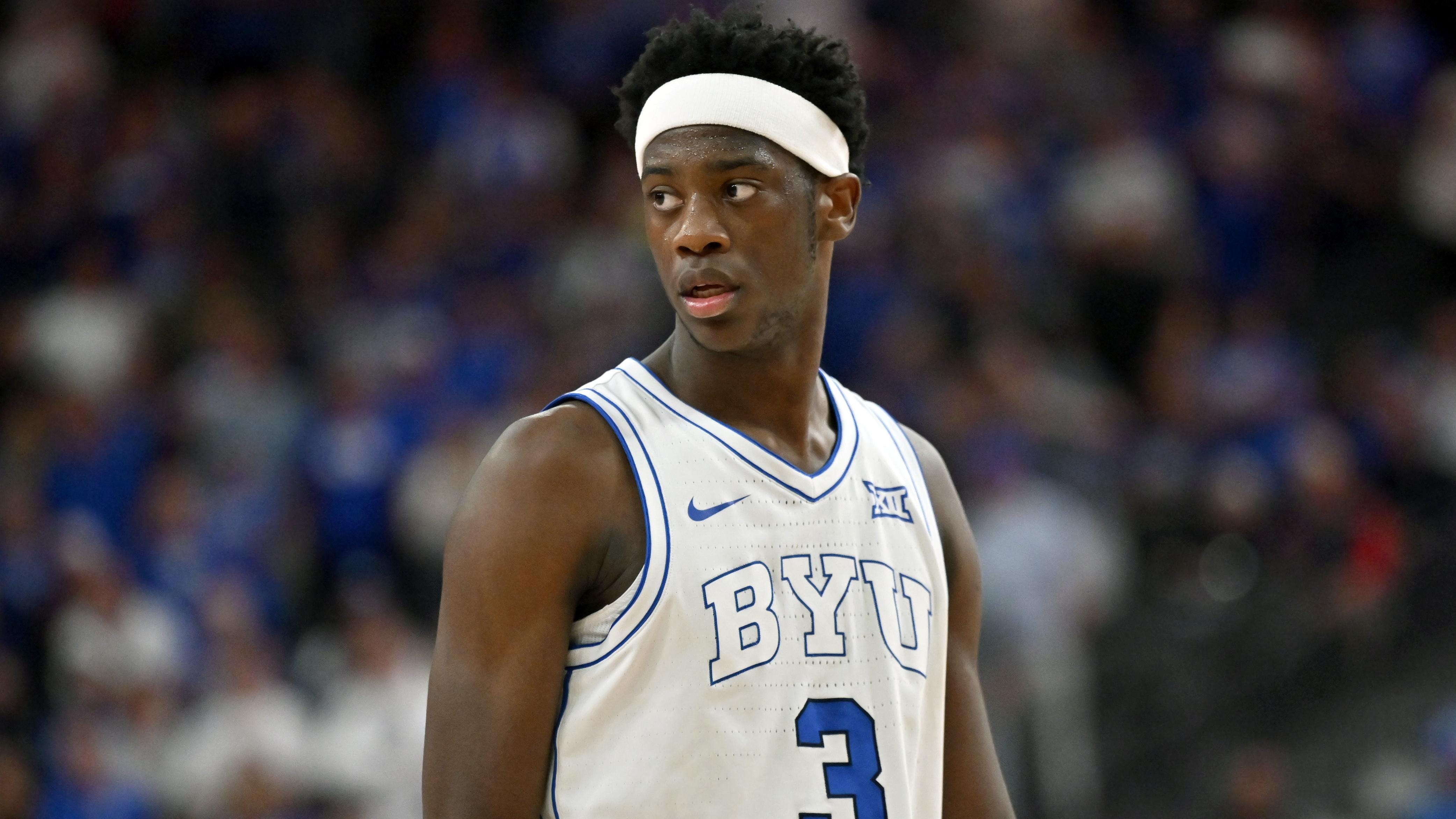
Aj is an eval that I struggled with. At face value, his Bart profile is incredibly flawed — anemic stock rates, a midrange-heavy diet, and a -7 2P% drop against top-100 comp (which especially hurts for a scoring prospect with weak ancillaries). These are all valid concerns, but he’s also a 6’9 handler who dunked the ball 43 times, shot 72% at rim (80% unast’d) with a monstrous 50 Ftr. He’s a true top-flight athlete and a tier-1 jumbo 2P creator with real playmaking ability; we can worry about the rest later. The low 3Pr is less than ideal, but any good coaching staff should be able to tweak it by turning his mid-range shots into threes.
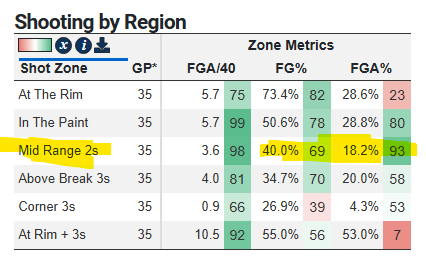
I also believe that he’s a better shooter than he was this year, even with his massive 284-FTA NCAA sample at 77.4% FT; he’s at 79.6% on 687 FTA, including pre-NCAA. In terms of his NBA projection, the Jaylen Brown comps are really lazy; JB posted an FTr over .3 once; this past (36 USG) season, he’s never posted a relative true shooting over +2, and he’s never had positive oTOV impact (which kills his oRAPM). AJ will be at the top of the league in FTA’s annually, pushing 60+ TS, and suppressing turnovers on high usage.
A simplified sell is this: bet on athletic young physical playmakers.

3: Darryn Peterson - 19.4 - 6’6 198 - Kansas
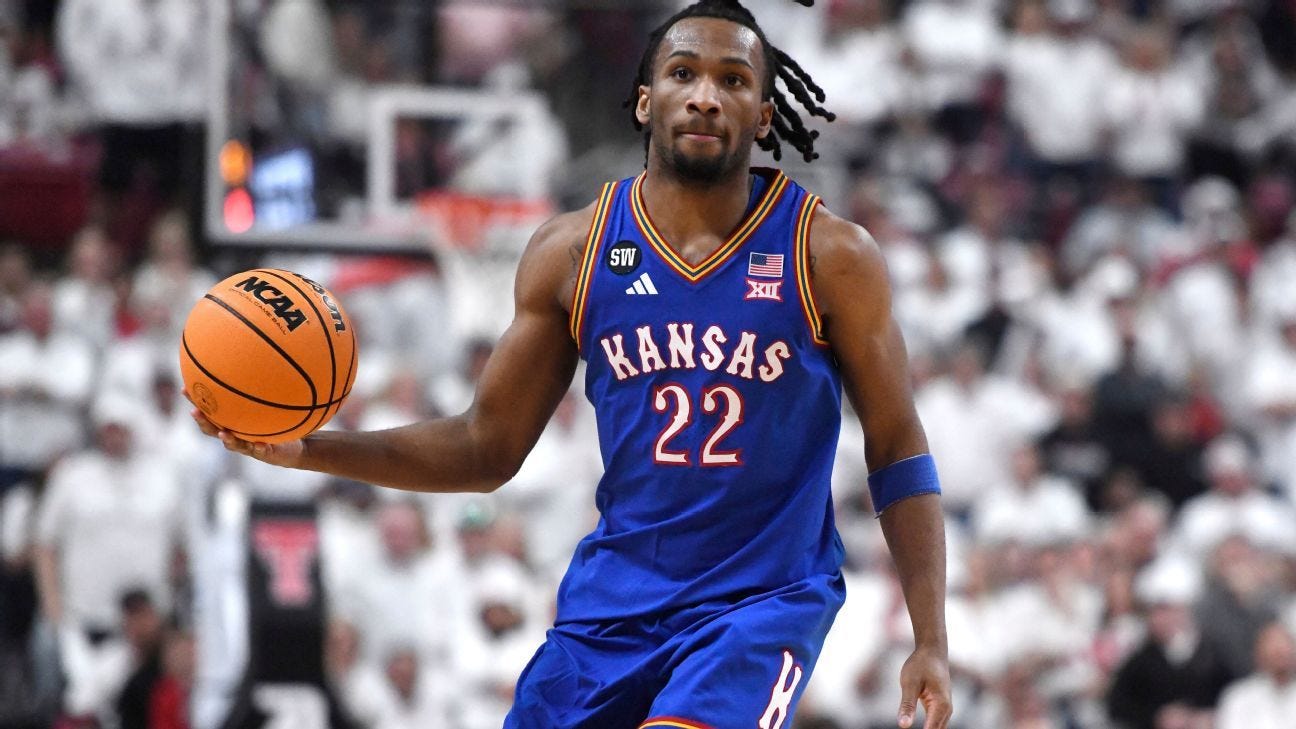
Darryn’s roller coaster of a freshman season, plagued with inconsistent PT, made him more confusing than he should’ve been. I don’t have any concerns about his health; more so, his all-time bad passing output for his usage in conjunction with passing priors that don't match up with the beard-in-car fables throughout Twitter. Averaging 4.6 assists per 40 minutes with a 1.8 a:to pre-NCAA doesn’t scream point guard; following that up with a 12.5% ast 1.0 a:to (on 31% USG) freshman season seems like an SG/Wing.
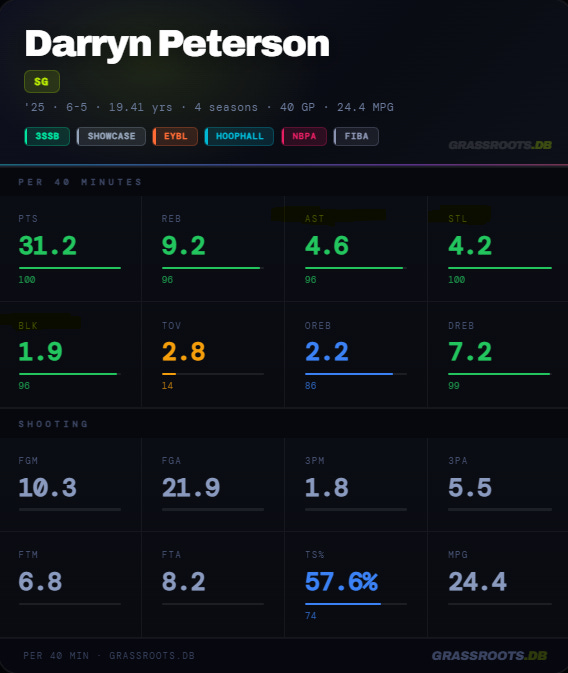
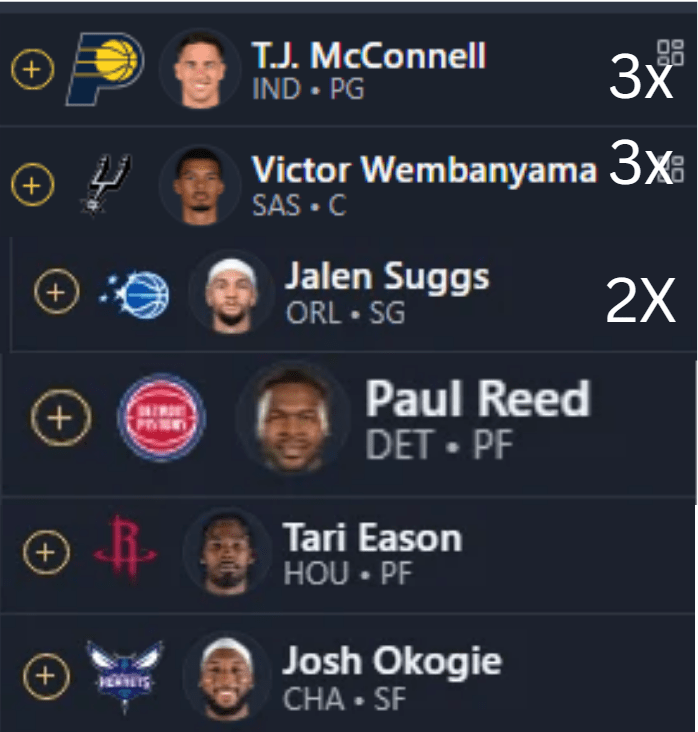
The real priors to be hugging for DP are the unreal stock output; his 2.9% STL doesn’t really jump off the page, but Kansas was 339th in dtov%. His priors and anthro lead me to believe he’ll push 4% stop on D while scoring 20+ PTS/75, which is something only Wemby and Paul Reed did in the 2025-26 season. Darryn (like the two players above him) is also a very unique mold; players who are on usg early in their careers tend to slouch on D, while DP does the opposite.
The only players to put up 20+ TSA/100 & 4%+ STOP since 2023-24:
4: Caleb Wilson - 19.9 - 6’10 211 - UNC
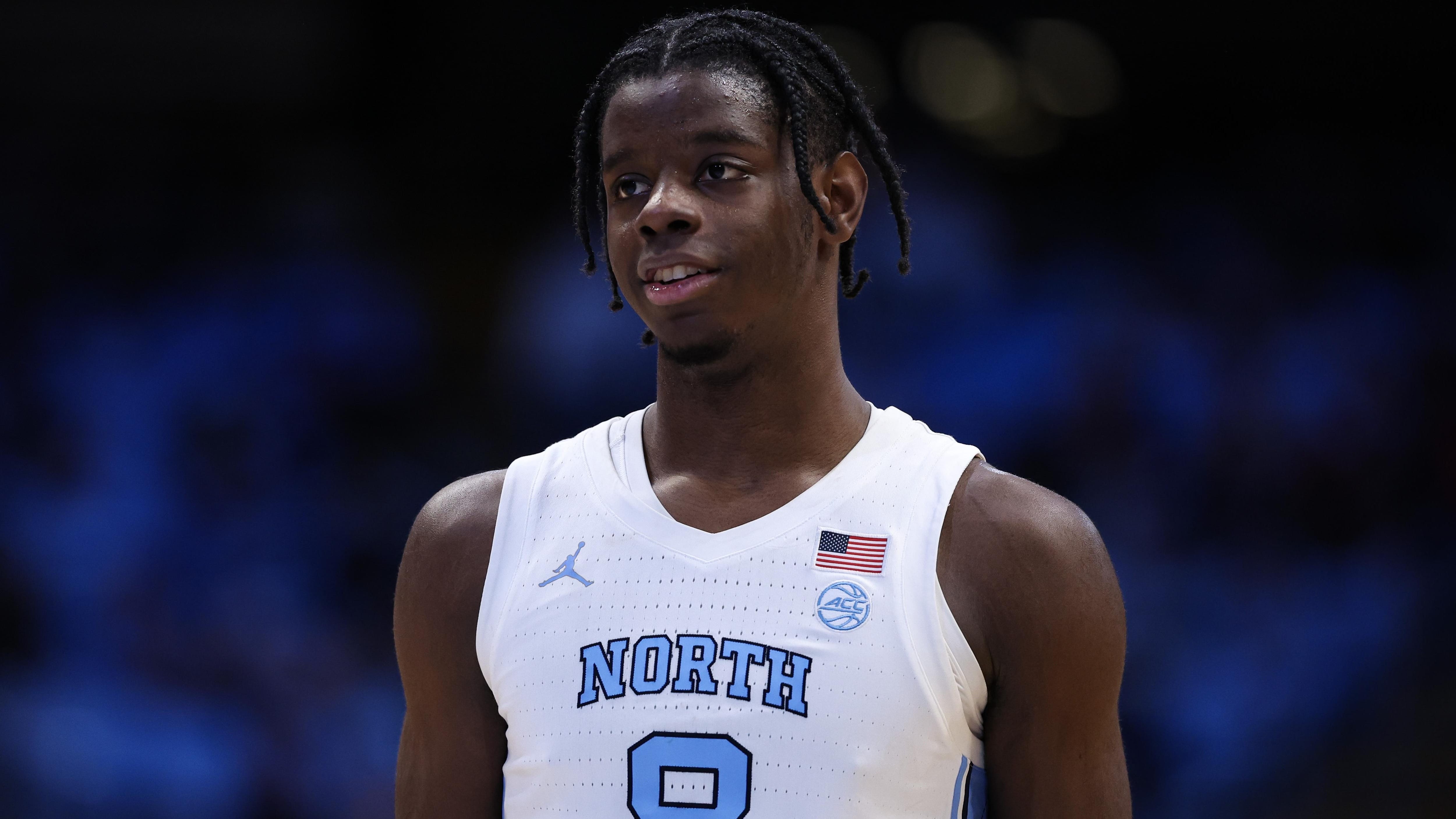
I’ve had Caleb as high as 2 in this cycle, but further inspection, along with a sad combine, has caused me to sour on him a bit. He’s about as productive and athletic as a tweener can be, but coming in at 211 pounds with a +3 wingspan as an older freshman (with questionable shooting projection) is rough. What makes Caleb so special is his passing and turnover aversion, especially given his usage.
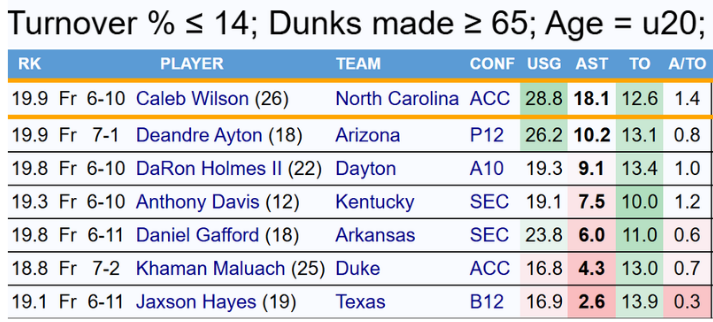
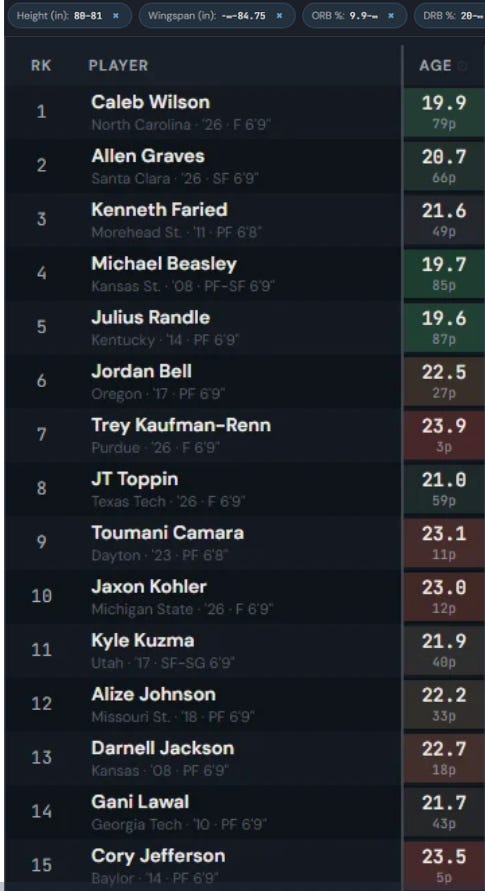
He averaged 4.9 assists per 40 with a 1.3 a:to for Georgia Stars 17U; between this and his 2.8% STL, in my opinion, he’s way more of a 3 than a 4. His BMI makes it nearly impossible to live as a big in the league, and I think his rebounding impact suffers as a result. Of all players with similar H/WS/REB to Caleb in the NCAA, he is the skinniest/lowest BMI here; he will be a true case of how far athl/motor can take you on the glass.
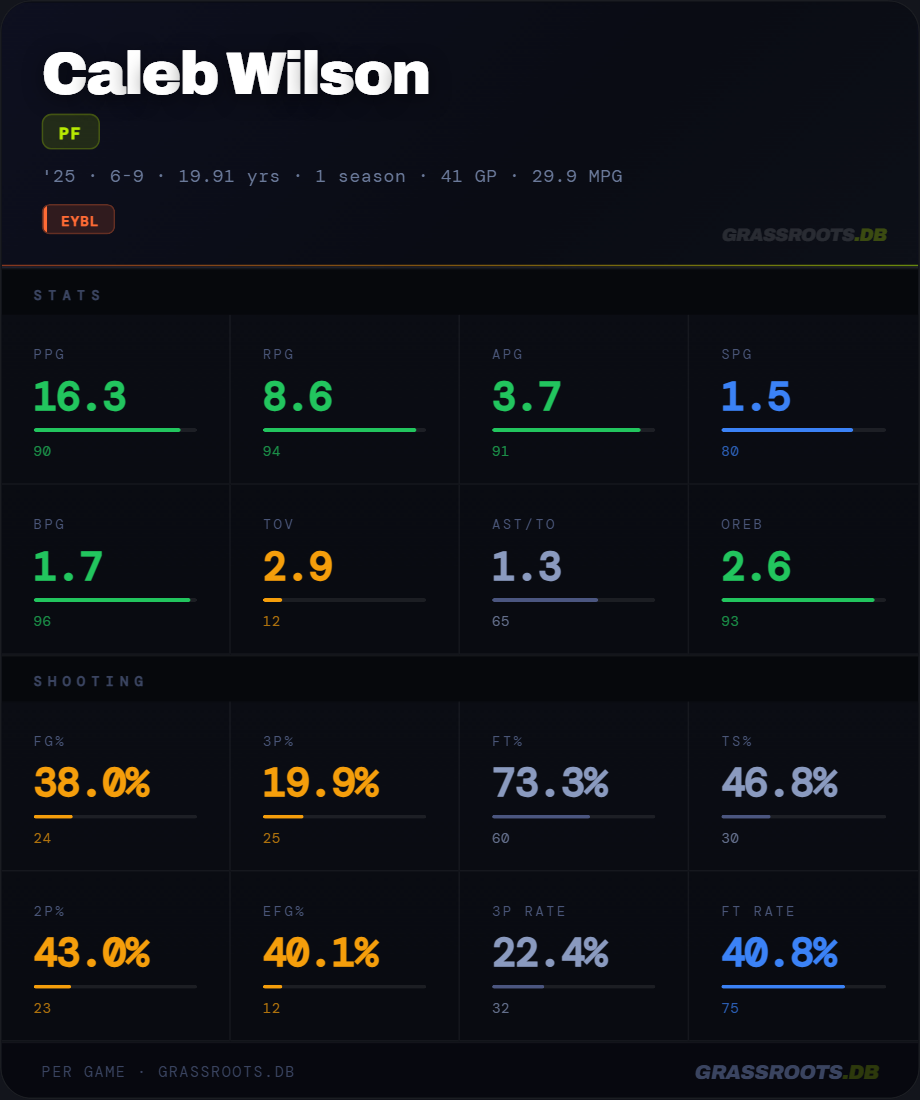
My projection of Caleb as a wing is what worries me about him, and such a limited NCAA sample (24 Games, 13 vs t100) doesn’t make me feel comfortable buying his scoring leap full-on. Caleb greatly struggled with his efficiency pre-NCAA (aside from his nightrydas stint with Cam Boozer), posting a 46.8% true shooting in the previously referenced 17U Georgia Stars season.
He relied on elite non-rim two-touch for his offense against more competitive teams; for example, in his highly praised 23-point game vs Duke, he shot 1-2 at the rim and 6-8 on non-rim twos. I’m not sure I buy such rapid touch development, and I worry about how he will score in the NBA when he can’t just dunk everything, especially if he gets reps as a creator (which he will as a top-4 selection).
5: Allen Graves - 6’9 226 - 19.9 - Santa Clara
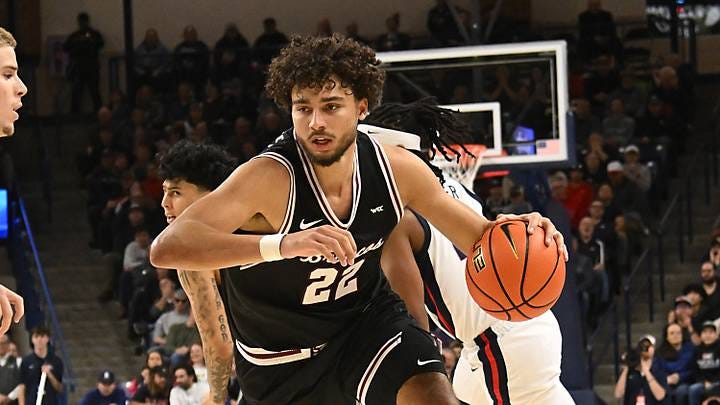
Similar to Cam, I don’t have much to add about Graves; everything I love about him was already expanded upon in the attached piece back in January.
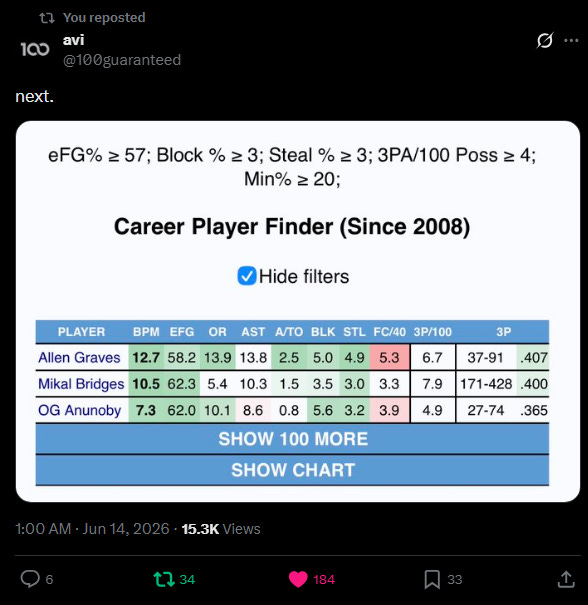
After that article, he became the most dominant player in the country by BPM, with a leap in shooting volume and efficiency I never would’ve expected. Allen is a true unicorn; his offensive rebounding/stock/turnover aversion is 1 of 1; off that alone, he’s slotting in at 5 for me.
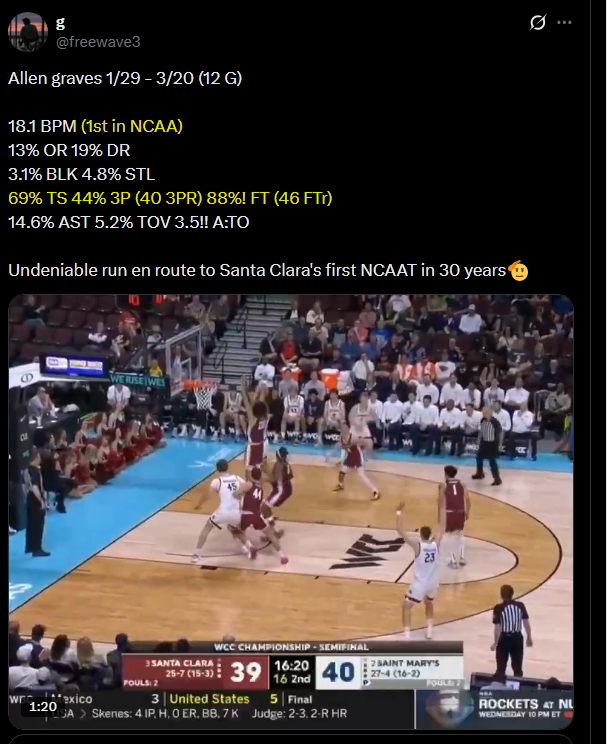
Wherever he ends up falling in the draft will be too low; he’s the next great contender glue piece.
6: Ebuka Okorie - 19.2 - 6’2 186 - Stanford
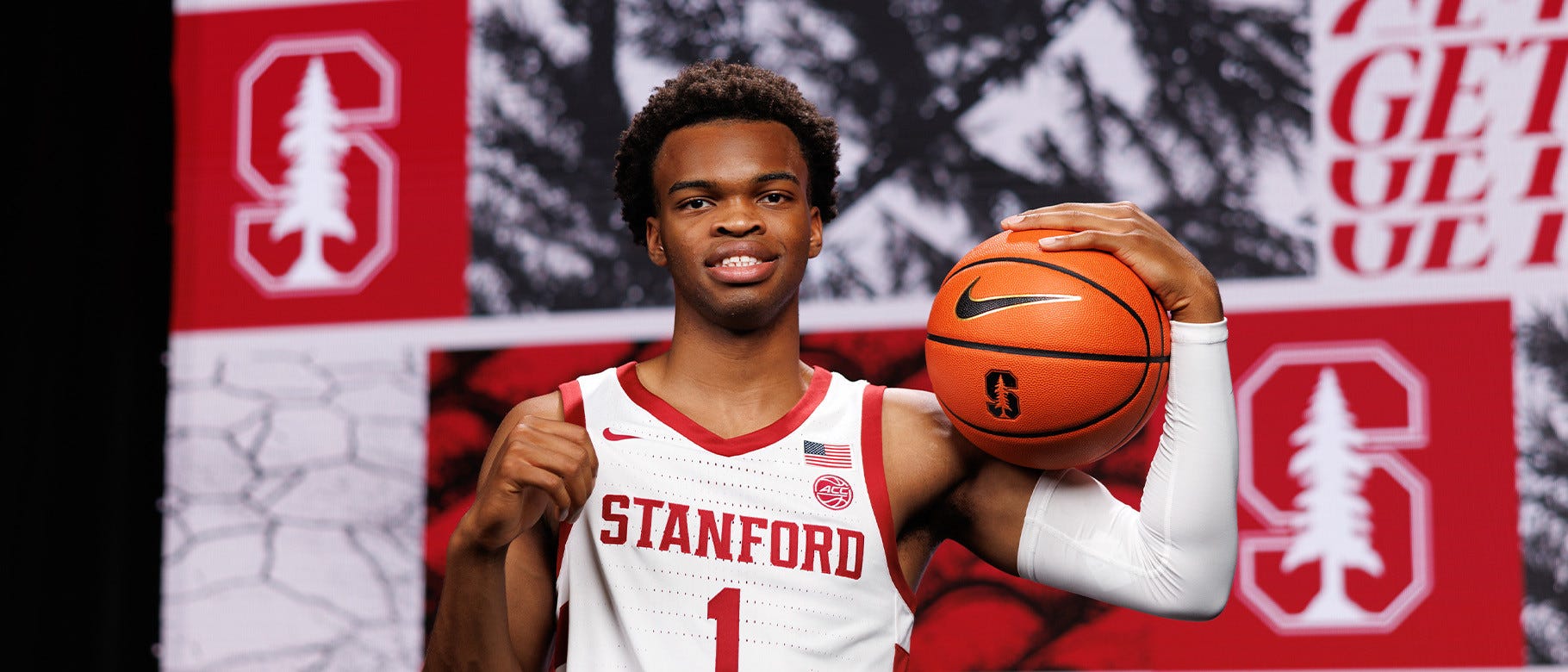
If I were to bet on anyone outside the top 3 to be an offensive star, it would be Okorie. The main reason he’s found in the backend of guard talks in this class (alongside Christian Anderson, behind Philon?) is that his recruiting evaluation was butchered. Okorie just had an all-time self-creation season at 18, but is never present in these franchise guard talks because of his lack of pedigree.
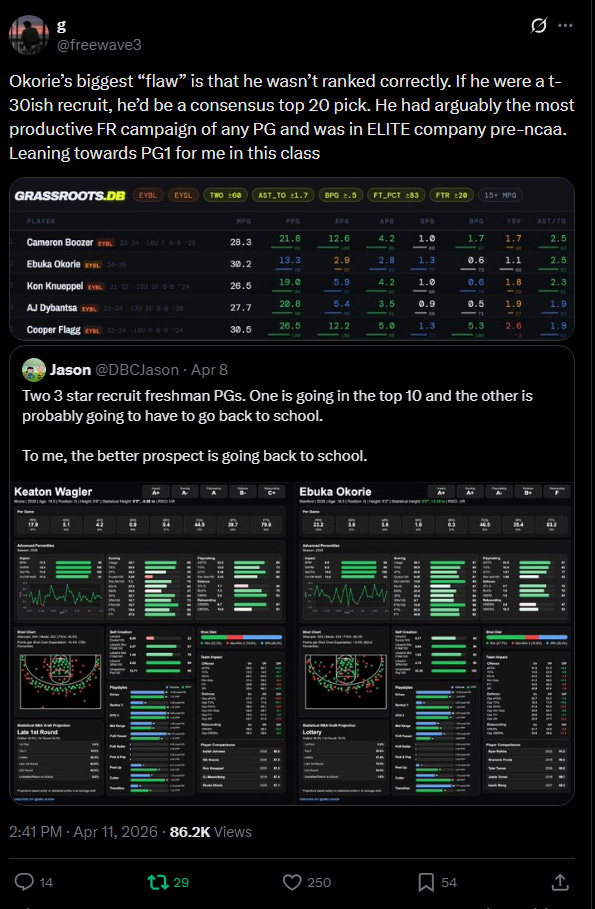
Okorie checks all of the boxes for me: youth/production/athleticism, and feels like a perfect guard for the modern NBA. His turnover aversion is and always has been elite; he had a career 2.5 a:to pre-NCAA and only turned it over 1.5 times per 40 in scholastic for Brewster Academy. The passing volume is the biggest concern for me, while his ast% jumped to 27% in conf play/vs t100 (same as Wagler/Stirtz), his passing priors weren’t strong either (just 4 ast/40), but in a league full of combo guards I think he’ll be fine, but his playmaking may cap out at Maxey level.
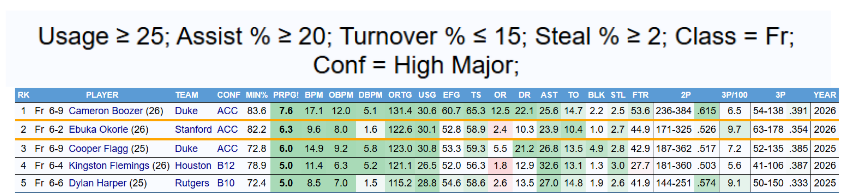
I’m not concerned about the lackluster NCAA 3PR (35.4), as he had a 48 3PR pre-NCAA and shot 41% on a 52 3PR in scholastic. I buy Okorie as the best non-MBJ shooter in this class; his rate/efficiency priors when he was scaled down, combined with a strong 83% FT on huge volume (only HM FR to shoot more FTS: Ament, AJ, Boozer). This lowers the concern level over his poor rim finishing, but even then he had unparalleled volume (only ‘26 FR to take more rim att: Nigel James, Boozer); he has the highest 3PR ever of any FR with 210+ rim att; his age along with weight/WS make me feel comfortable projecting the finishing to improve. Okorie is the youngest guard in the class and has the athleticism/production/frame to shatter his currently projected ceiling.
7: Aday Mara - 21.2 - 7’4 260 - Michigan
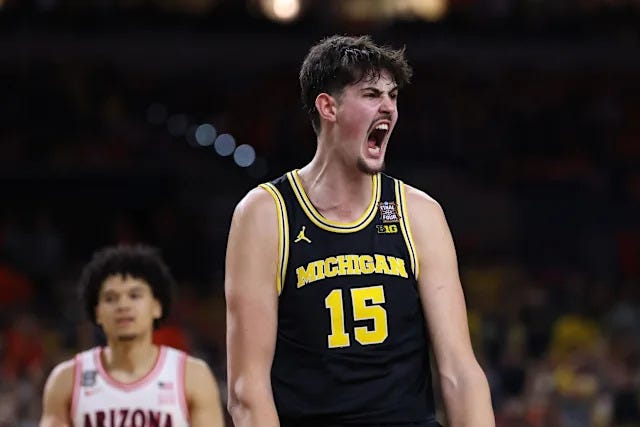
Mara is quite simply too big to fail, so I’ll keep this brief; he had the highest ast% season of any player over 7’2, making him one of the more unique footers in recent years. I think his lack of steals and super-poor free-throw shooting sort of cap his ceiling, along with being sort of turnover-prone (which is kind of a given when passing at this size). I hate the concept of drafting high-floor players, but Mara will be one of the 3 most impactful rookies out of the gate; he’ll peak as a DPOY-level monster on defense, while bringing hub upside that others his size dream of.
8: Dailyn Swain - 20.9 - 6’7 211 - Texas
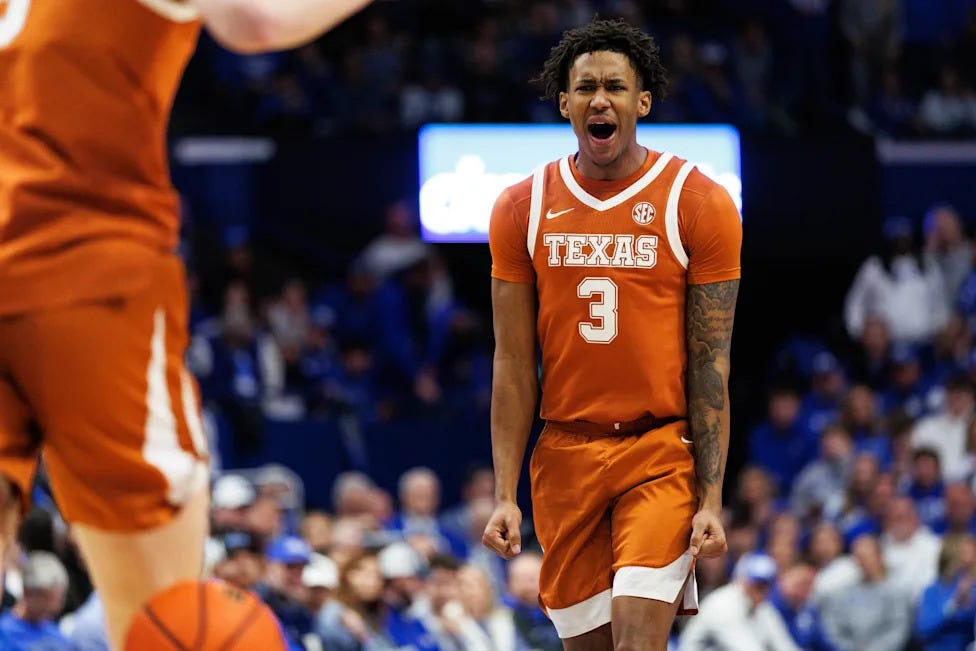
Swain is one of my favorite stories in the class, from being underranked as a HS prospect despite super-productive EYBL seasons, to being a relatively unknown analytics darling at Xavier, to leading Texas in scoring en route to a heartbreaking walk-off loss to Purdue in the Sweet 16. Despite his disappointing combine (only 6’10 WS, 211 lbs), Swain’s multi-year productivity is as good as anyone’s in the class. His role malleability is second to none (I pref over Yaxel bc the on-ball reps were against much better comp); his underclassman years profiled as trenchwork wing defender, then he had an all-time wing 2P creation season where he looked like a potential NBA primary at times. I think his turnover issues damper some of his upside there, but I’m not really concerned about his shooting projection at all. Swain has the second-lowest career 3P% among players to shoot 81% on 350+ FTA; the ball has to go in eventually, and going from 11/58 3P in FR/SO to 32/92 as a JR signals that.

In their draft years: Delon 18% ast’d, Swain 19% ast’d (6’7), Keon 63% ast’d, Mikal 63% ast’d. His 2P creation and ability to draw free throws profile of an offensive star, which is why I’d be more comfortable giving Swain on-ball reps to figure it out rather than one of the guards in the mid lotto range (fun fact, Swain is only 2 mo older than Burries)
9: Kingston Flemings - 19.4 - 6’3 183 - Houston
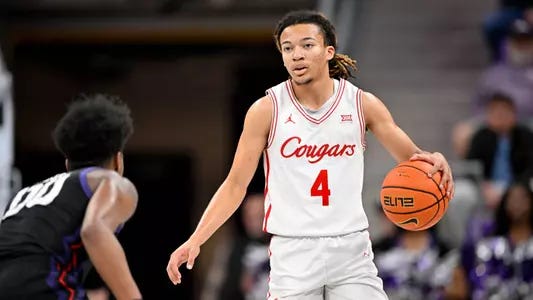
I think Kingston is going to have a rougher transition to the league than my peers. His scoring is genuinely worrisome (I know, Houston tax), featuring the same finishing issues as Okorie but with 74 fewer att (in 6 more games), an FTr 17 points lower, and 194 non-rim twos to 106 threes. Kingston will push the limits of how far feel can take you on both ends of the floor; I think the defensive upside is lowered with a 6’3.5 wingspan, but he still managed to put up a 4.3% STK, which highlights how insane his defensive feel is.
Flemings reminds me of a supersport version of former Cougar Jamal Shead: younger, more athletic, and a better shooter.

10: Mikel Brown Jr - 19.4 - 6’4 190 - Louisville
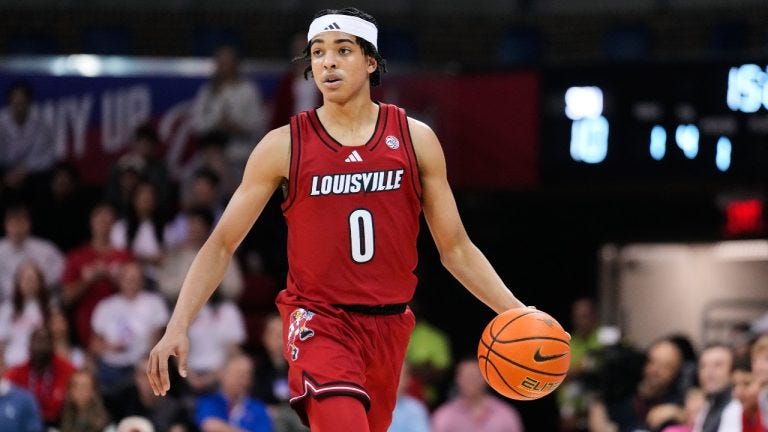
Similarly to Graves, I’ve already dove deeply into Mikel and don’t have anything else to say. TLDR for why the guy I wrote about is 10th: He’s an older FR and has lifelong turnover issues.

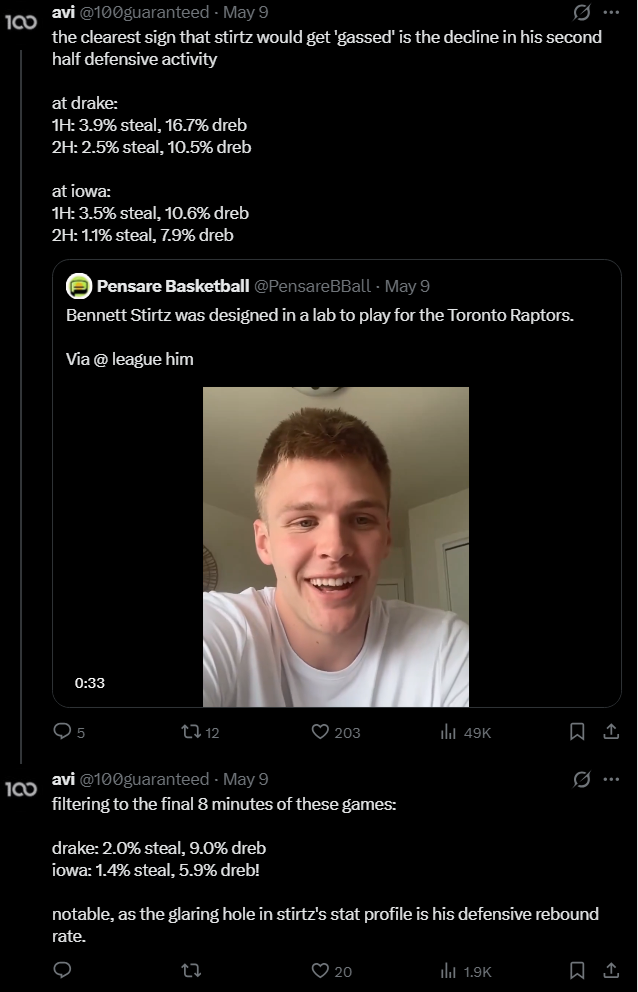
11: Bennett Stirtz - 22.7 - 6’3 186 - Iowa
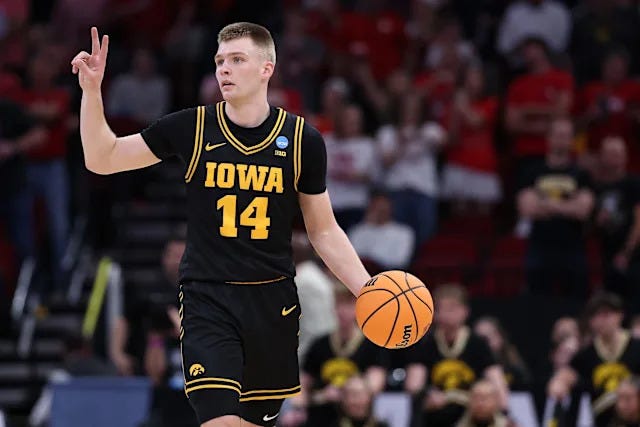
Stirtz has the most Teflon scoring profile in the class, shooting 70% at the rim, 47% on non-rim twos, 36% from 3 on a 48.9 3PR, and 84.8% at the line. The biggest flaw for Stirtz is his age. At Iowa, both his playmaking and defense cratered a bit, but combining his two D1 seasons, he remains at 29% AST & 2.8% STL. He’s also such a weird eval because of his 1-of-1 circumstance, following Ben McCollum to Drake, then eventually Iowa, and playing basically every minute possible over the last two seasons. The excuse of a player’s low effort on defense to avoid fouling “because their team needs them” is common, but for Stirtz it really rings true; he was the team.
12: Yaxel Lendenborg - 23.7 - 6’9 241 - Michigan
Yaxel had a Teflon super-senior season; he improved on the biggest issues with his profile last year (3Pr 15 → 46, FT% 75.7 → 82.4%), and finished second in the Nation in BPM. This, along with his elite anthros (7’3 WS), puts him in his own tier among upperclassman prospects, but I struggle to get him any further. As simple a gripe as it is, Yaxel being 24 years old before the season starts cannot be understated; he’s older than Josh Giddey, who was drafted 5 years ago. An NBA-caliber player who’s playing their age-23 season in the NCAA should be this dominant, and 20% USG playing on the best team in the Nation leaves me unimpressed. In his two seasons at UAB, in 25 games vs. T100 comp, he shot 107/223 (48%) from two & 10/39 (26%) from three. Under Dusty May’s tenure, only one of his players has been drafted, that being Danny Wolf, and Wolf saw a similar boost in 2P efficiency at Michigan, which completely evaporated in the NBA.
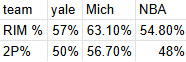
Obviously, Yaxel is far more athletic and a much, much better prospect, but I am unsure how much of his 2P scoring improvement was due to him, and I am generally underwhelmed by a 20 USG season at age 23.
13: Morez Johnson Jr. - 20.4 - 6’10 250 - Michigan
Morez was the ultimate champion of the combine for me, coming in at 6’9 BAREFOOT, 250 lbs with a 7’3.5 wingspan. His size and athleticism lead him to being a monstrous rebounder and finisher, and unlike most other players with a similar skillset, he’s a capable free-throw shooter. His frame
I project Morez to be a capable 3P shooter in the NBA; that, along with being one of the best offensive rebounders in the league, will make him super unique.
14: Keaton Wagler - 6’6 188 - Illinois
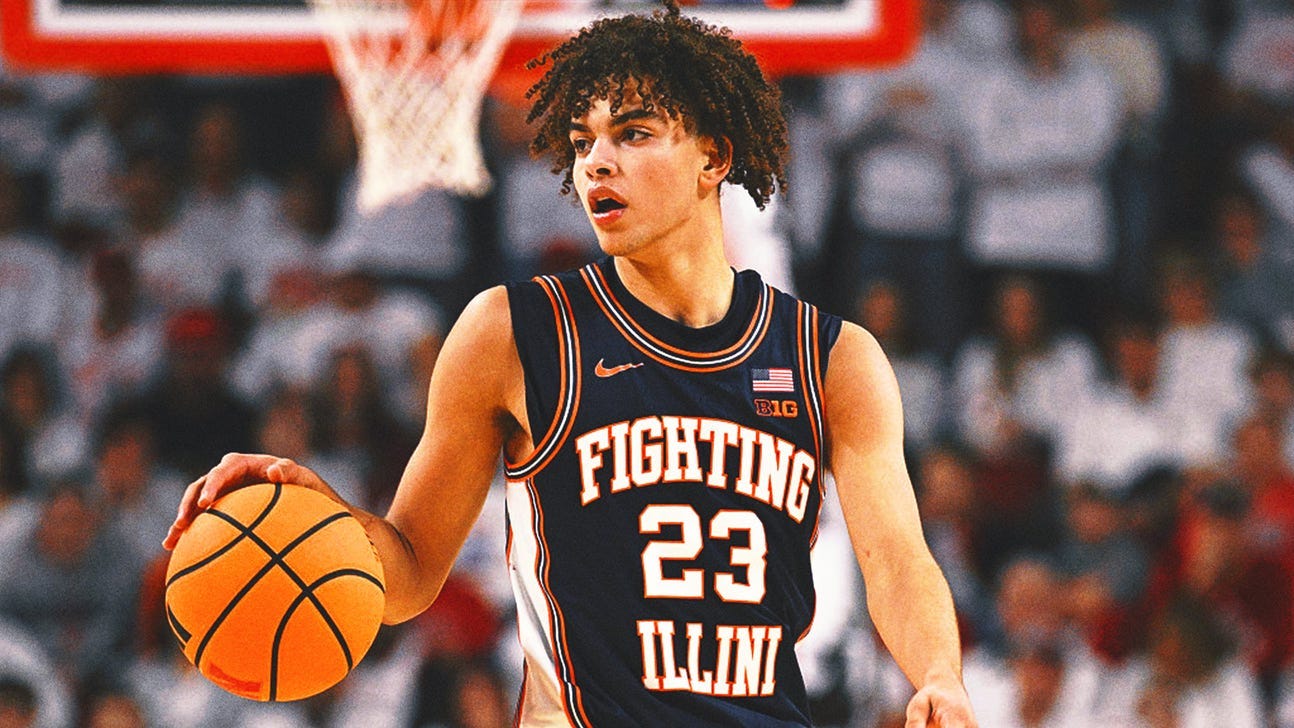
It’s almost antithetical to fade Wagler with how productive he was, but I cannot get over the athleticism, especially after he measured with a measly 6’6 wingspan. Illinois was the best-spaced team in the Nation; their 6’9 or taller players had 3PRs of 58.5, 86.3, 59.0, and 41.8, and with this Wagler only managed to shoot 57% at the rim (53% vs t100). 2P scoring is really where his lack of athleticism shows itself; while his ability to draw fouls softens the wound slightly, it still destroys his projection as a primary for me. He reminds me of Egor and Kasparas in terms of handlers; it’s just not possible to stay on the ball in the NBA as an athlete; both were taken off the ball in their rookie years and turned into connective shooters. That’s what worries me most about Wagler: his 79.6% FT isn't high enough for me to project him to shoot 40% from 3, and his shooting this well masked his overall scoring woes (46% 2P, 42% 3P vs t100). If Wagler becomes a connective shooter, how valuable would that be? Even with the stock suppression at Illinois in mind, those numbers were bad (Will Riley & Kasp had horrible NBA stocks year 1), and his frame isn’t super elite so that he won’t be bringing much value on defense. Wagler’s one-up on flawed handlers like Kasp/Egor is his turnover suppression, but I’m not sure how impactful it’ll be if he’s not on the ball.
.
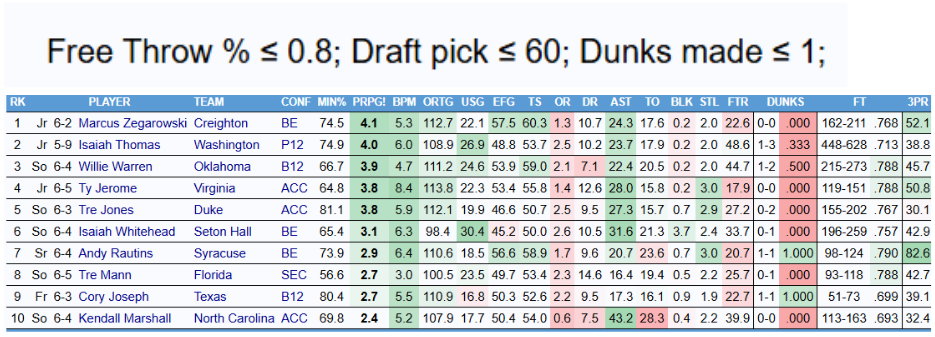
15: Hannes Steinbach - 6’11 248 - Washington
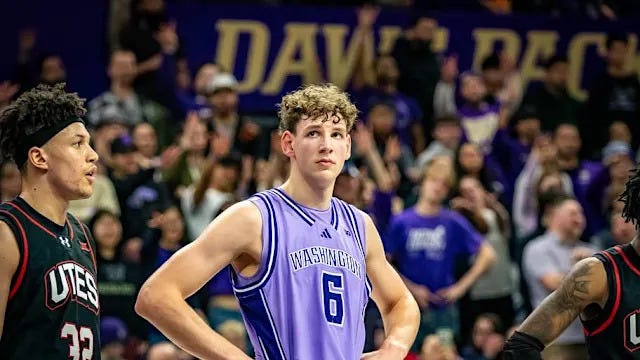
While I’m generally good on one-way bigs, Hannes being real center-sized with best-in-class rebounding and strong touch indicators makes me wary of going too low. His sell is somewhat similar to Morez, as he’ll shoot it in the league while also being a super strong rebounder on both ends. Hannes also has good self-creation for a big, while I think his lack of passing makes any hub upside unlikely; it gives him a base for his offensive impact to drown out whatever he bleeds on D (which will also be helped by elite dREB).
16: Brayden Burries - 6’4 215 - Arizona
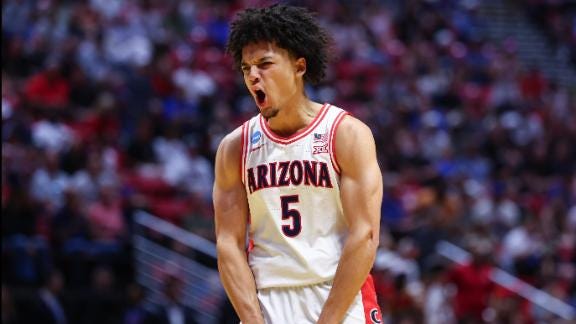
Burries doesn’t have a superpower, and when you turn 21 years old before your rookie season as a 1nD, you need one. He was created in a lab to be a jack-of-all-trades, master-of-none: 21 usage, shooting guard passing, passable stocks and rebounding, and okay shooting volume/projection (41 3Pr as a 2 is not good). Burries will have a long NBA career, but I don’t know what he’ll end up doing at a plus-plus level, and he’s just so old relative to his class. There is a slim chance I get burnt here because he had the volume-scoring gene in EYBL, but since he won’t be playing with a +1-2-year age advantage in the NBA, I'm less worried.
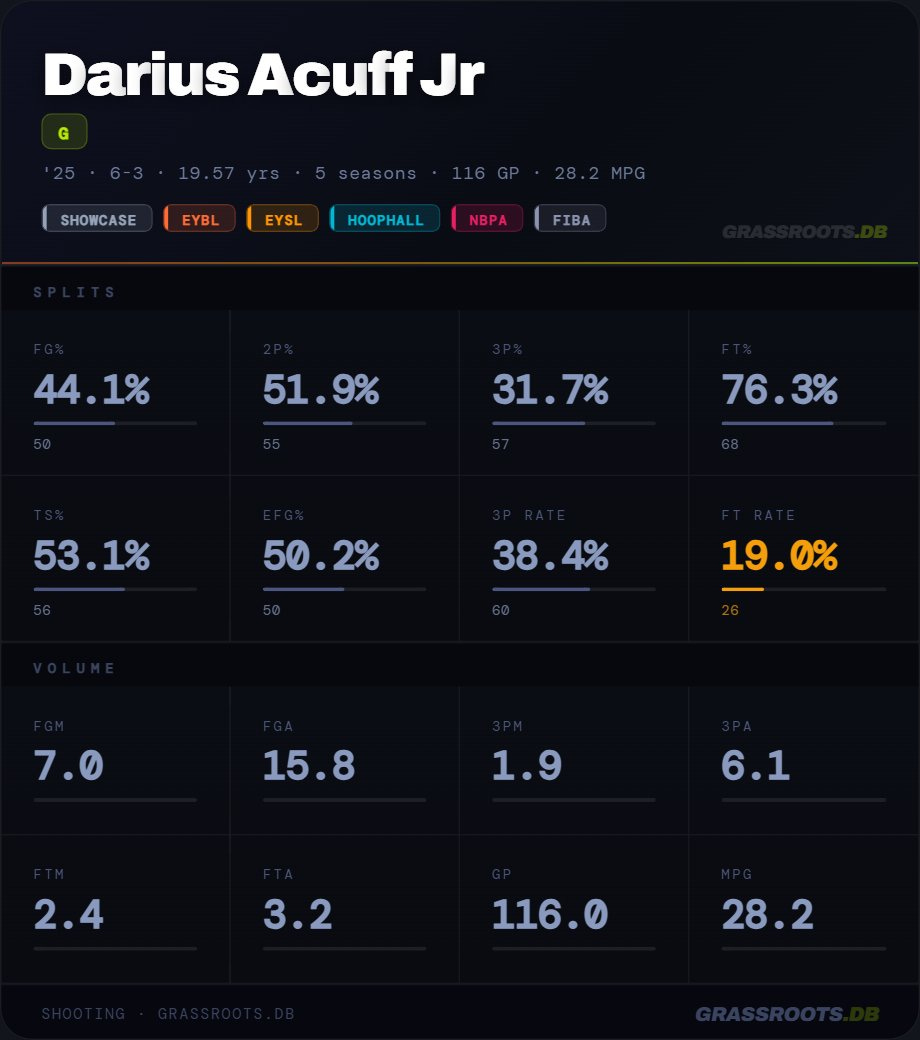
17: Darius Acuff Jr - 6’3 185- Arkansas
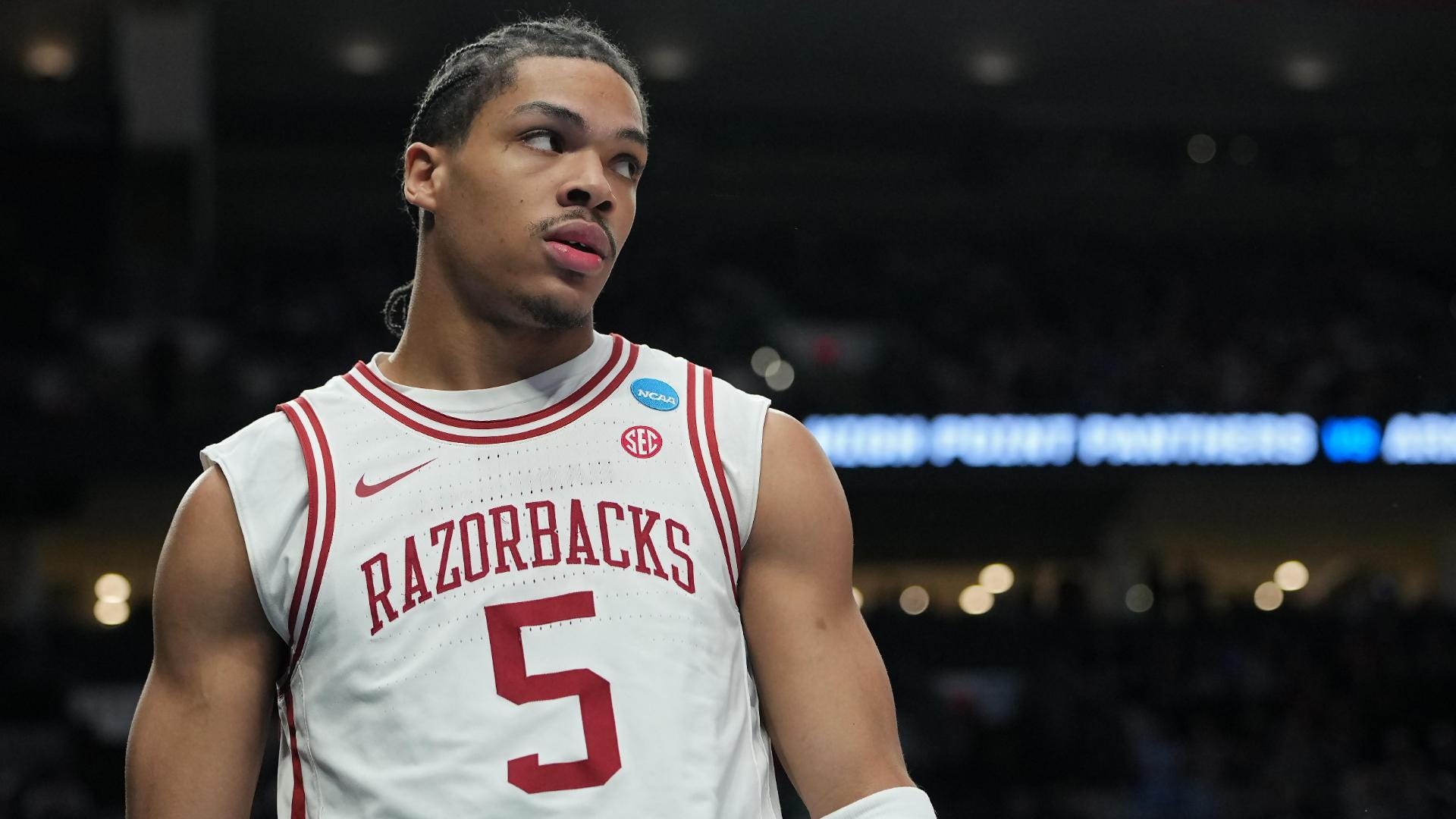
I don’t have anything super unique to contribute to the endless discourse about the most divisive player in college basketball/the 2026 draft. While he will stick to the ball, I have similar concerns about his shooting outlook to Wagler's. So much of Acuff’s profile is banking on shooting 44% from 3; I highly doubt this maintains in the NBA, as he’s an 81% FT shooter, and his shooting priors look more like someone who’ll be closer to 30% than 40%.
18: Jayden Quaintance - 6’10 253 - Kentucky
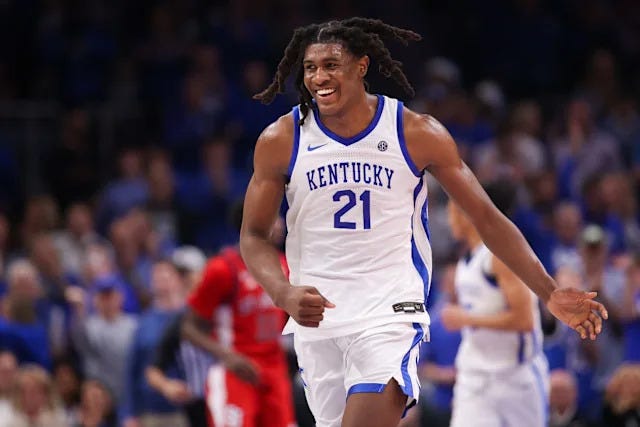
If healthy, Jayden will be one of the best defenders on the planet out of the gate, but his offense and the time he missed concern me. I struggle to see how JQ can score the ball on O aside from putbacks and basic rim running, and his free-throw shooting is so bad teams would feel comfortable fouling him and taking their chances there (Mitchell Robinson). He’s also very turnover prone, which is likely to make him a complete negative on O in the early years. I don’t want to index too heavily on anything health-related, since we don’t have access to that information. Still, him only playing 4 games since 2/25/25, and with so much of his game relying on athleticism and his lack of skill on offense, is super concerning.
19: Christian Anderson - 6’1 180 - Texas Tech
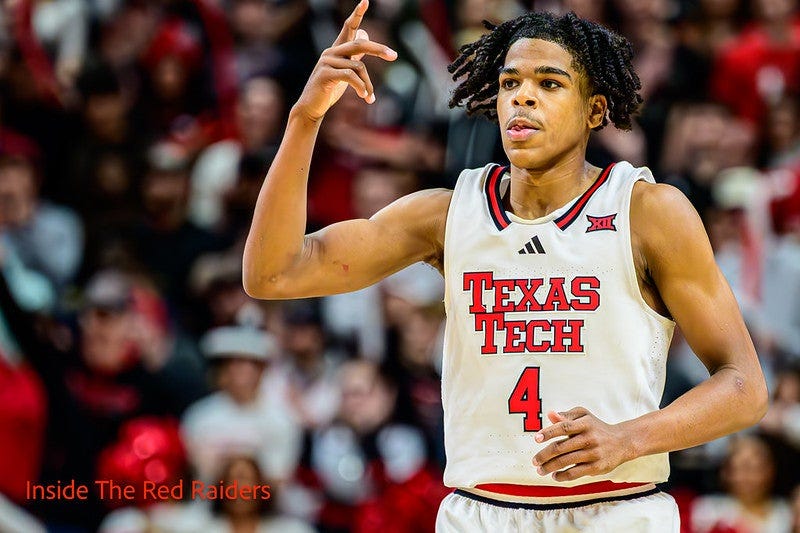
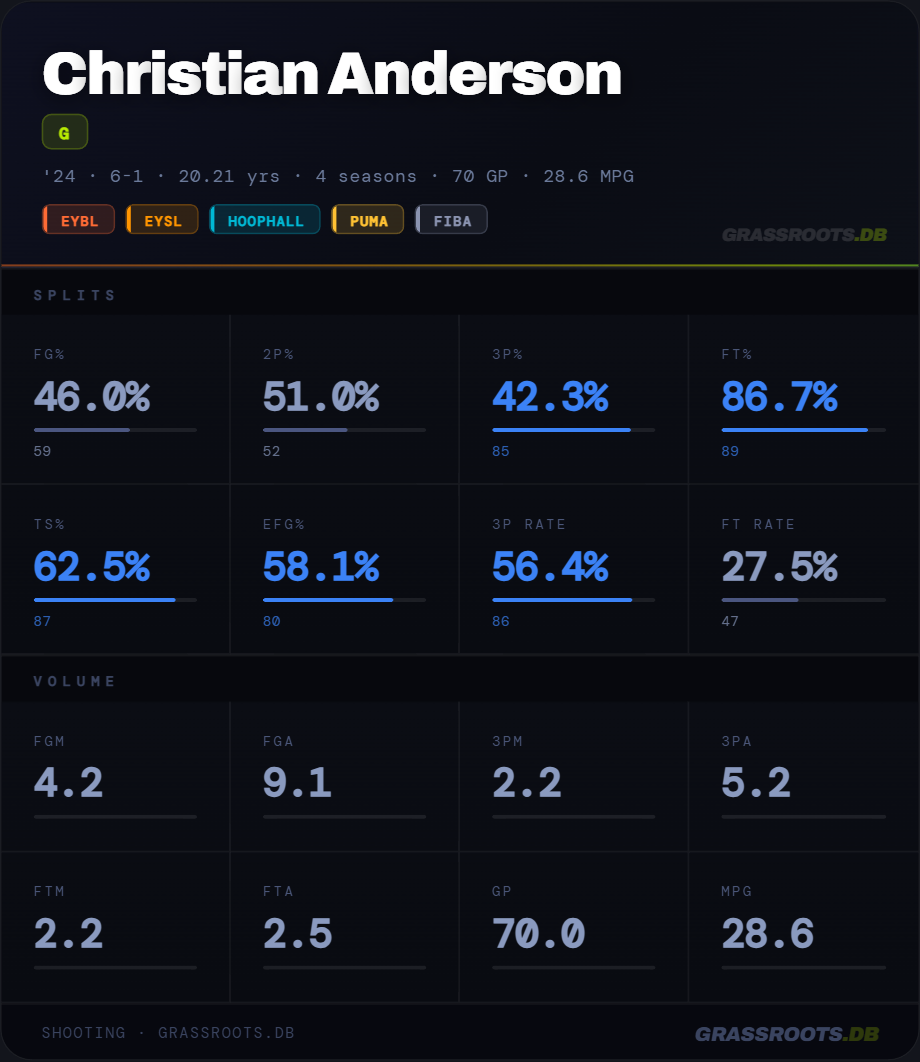
Christian shot 40% from 3 on a mind-bending 447 attempts in his two NCAA seasons, a career 3Pr of 63.2, and he has the best shooting priors in the class. Christian will be one of the most dynamic 3P bombers in the league, and I think there’s room on every team for an athletic flamethrower who can run the offense off the bench.
20: Koa Peat - 6’8 245 - Arizona
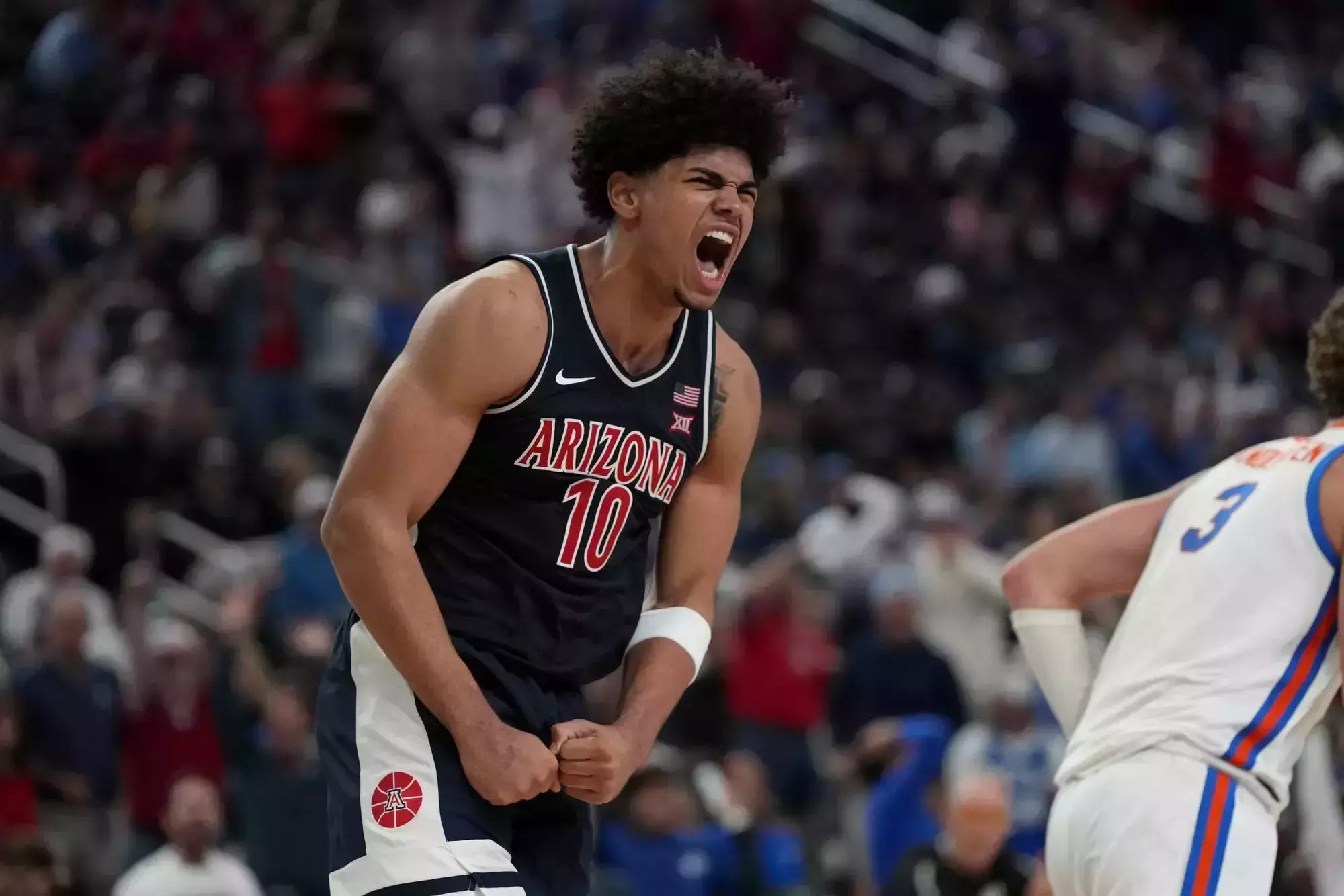
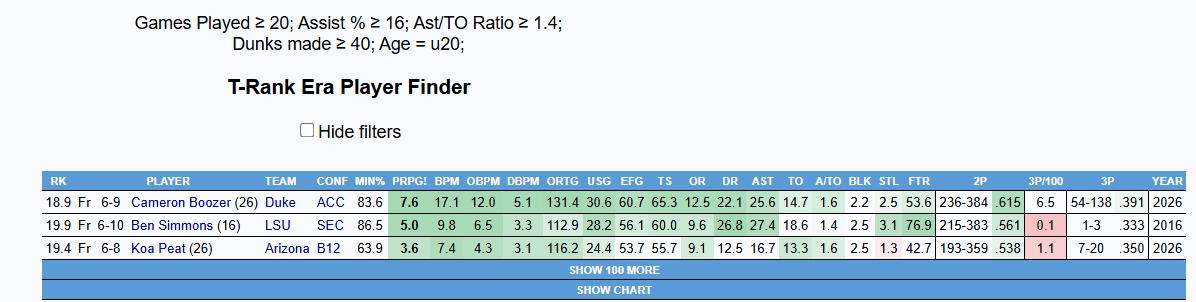
Koa dunked the ball 53 times, had a 16.7% assist rate and 1.6 assist-to-turnover ratio at 245 pounds. He’s young and athletic, and he was productive enough. I think there’s an avenue where Koa shatters his NCAA profile; his priors were elite, and his skill intersection is unique enough to figure it out (he somehow went from a 2.1 steals-per-40 guy to .9 at Arizona).
Most anticipated work of the cycle for me.
Amazing work